What Is Road Freight Transport? 2026 Guide
 İnan Tiryaki
Summarize with AI
- Road freight transport is the door-to-door carriage of goods by truck, tractor-trailer, or van; in Türkiye, road accounts for 91.3% of domestic intercity freight (KGM, 2024).
- A trip goes through seven steps: request, finding a vehicle, loading appointment, loading, the road, delivery, and closing with documents.
- Commercial carriers obtain an authorization certificate; no new C2 has been issued since 2023, and L2 is used for international commercial carriage. Trips use a waybill, and international trips use a CMR.
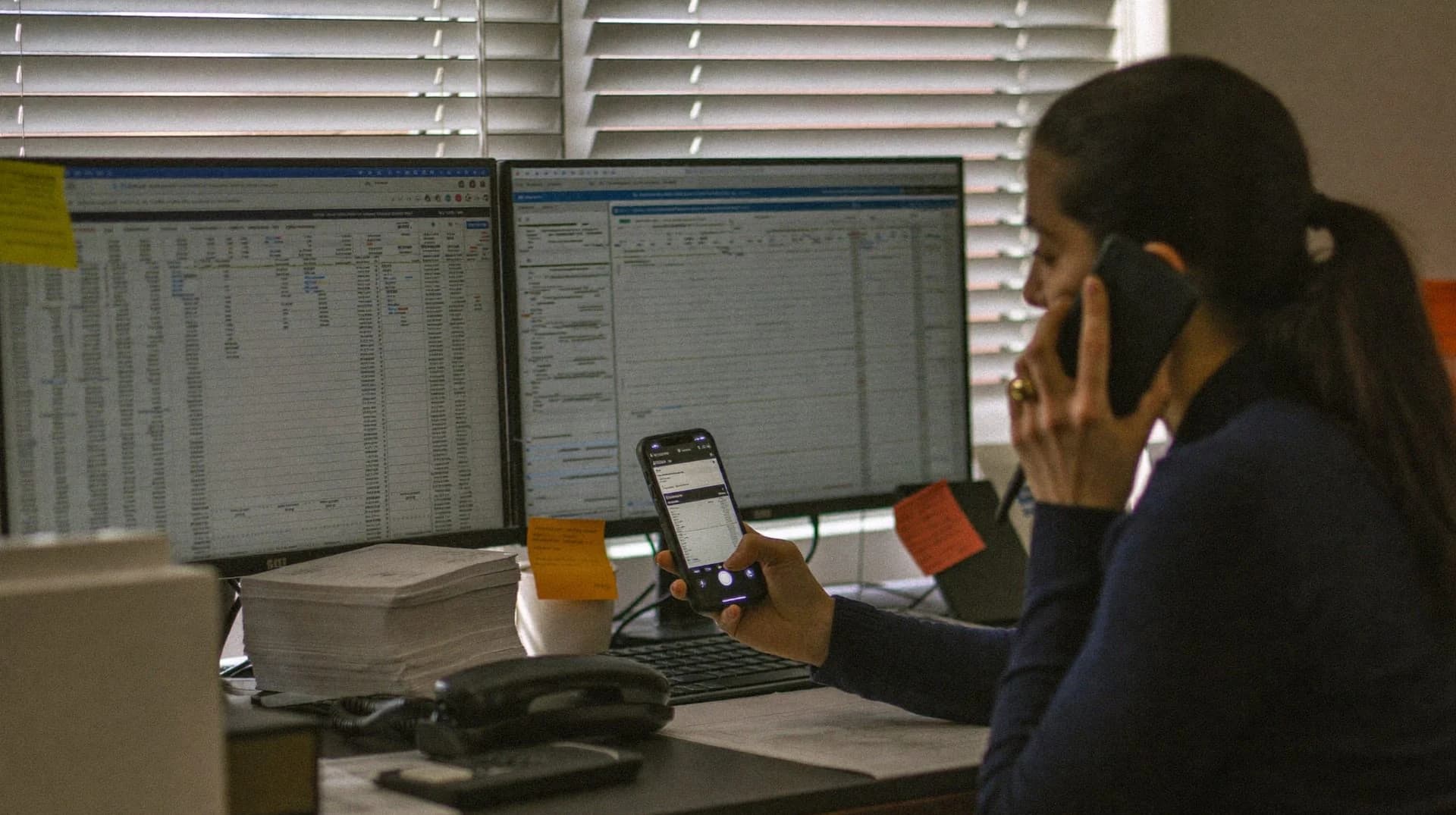
- The biggest time loss happens not on the road but in the office: reaching the driver, asking for location, and waiting for the signed waybill.
Road freight transport is the carriage of goods by truck, tractor-trailer, or van over the road network from one point to another. In Türkiye, most domestic intercity freight moves this way: according to the 2025 Annual Report of the General Directorate of Highways (KGM), road accounted for 91.3% of freight transport in 2024.
This guide explains step by step how road freight transport works: its types, the authorization certificates in force as of 2026, the documents used on a trip, drivers' driving rules, Türkiye's 2024–2026 figures, how freight rates are set, the most common bottlenecks in the field, and how freight tracking is done.
What Is Road Freight Transport?
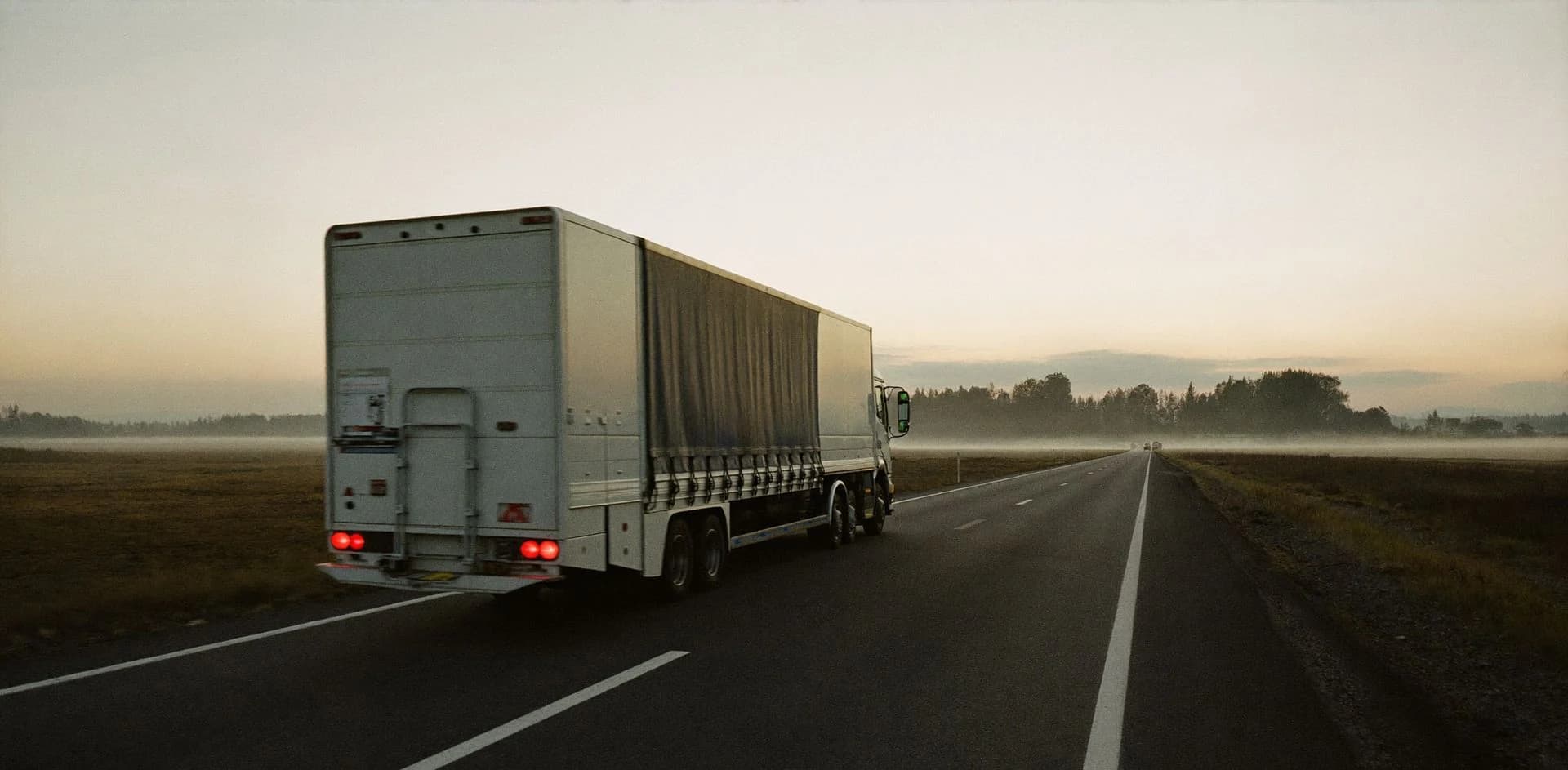
Road freight transport is the carriage of goods by motor vehicles over motorways, state roads, provincial roads, and city streets. Goods travel door to door: from a factory to a warehouse, from a warehouse to a store, from a port to a factory, or from one country to another.
A trip usually involves five parties:
- Cargo owner (shipper): The manufacturer, exporter, or trader sending the goods.
- Consignee: The company or warehouse receiving the goods.
- Carrier: The company or vehicle owner providing the vehicle and the driver.
- Broker or freight forwarder: The intermediary that brings the cargo owner and the carrier together. It may not own vehicles.
- Driver: The person who drives the vehicle, picks up the goods, and delivers them.
The more parties there are, the more often information changes hands. The loading time, the license plate, the arrival time, and the signed document are usually passed from one party to another by phone or on WhatsApp. Many bottlenecks arise in this handover.
Road Freight Statistics: Türkiye 2024–2026
According to the table published by the General Directorate of Highways (KGM) in April 2026, 358,880 million ton-km of freight was carried on the road network under KGM's responsibility (motorways, state roads, and provincial roads) in 2025. The figure was 347,809 million ton-km in 2024, an increase of 3.2% in one year. A ton-km is one ton of goods carried one kilometer.
| Indicator | Value | Source |
|---|---|---|
| Road's share of domestic intercity freight (2024) | 91.3% | KGM 2025 Annual Report |
| Maritime share (cabotage, 2024) | 5.2% | KGM 2025 Annual Report |
| Rail share (2024) | 3.5% | KGM 2025 Annual Report |
| Freight carried on the KGM road network (2025) | 358,880 million ton-km | KGM, Traffic and Transport (April 2026) |
| Freight carried on the KGM road network (2024) | 347,809 million ton-km | KGM, Traffic and Transport (April 2026) |
| Share of 2025 freight carried on motorways | 98,128 million ton-km (27.3%) | KGM, Traffic and Transport (April 2026) |
| Trucks' share of registered vehicles (end of October 2026) | 3% (35,189,866 vehicles in total) | TÜİK (Turkish Statistical Institute) |
| Vans' share of registered vehicles (end of October 2026) | 14.2% | TÜİK (Turkish Statistical Institute) |
Based on TÜİK's ratios, there were about 1 million registered trucks in Türkiye at the end of October 2026 (3% of 35,189,866 vehicles).
KGM data does not cover municipal and village roads. So, including urban distribution, the real volume is larger than the table shows.
Types of Road Freight: Full Truckload and Less Than Truckload
Road freight is classified by the size of the load and where it is going.
| Type | What it means | When to choose it |
|---|---|---|
| Full truckload (FTL) | The whole vehicle is filled with one shipper's goods and goes directly from the loading point to the delivery point. | When the load fills a vehicle or speed matters. |
| Less than truckload (LTL, part load) | Small loads from several shippers are combined in the same vehicle; the vehicle makes several stops. | When the load does not fill a vehicle and cost is the priority. |
| Urban distribution | Daily multi-stop deliveries from a warehouse to stores or customers. | Short distance, many stops. |
| Intercity transport | Between provinces, mostly by tractor-trailer or truck. | Between factories, warehouses, and regional hubs. |
| International transport | The load crosses a border; a CMR and customs documents are required. | Exports and imports. |
Beyond these, there are types governed by special rules, such as cold chain (by refrigerated vehicle), dangerous goods, and heavy-load transport.
Vehicles Used in Road Freight
The vehicle is chosen by the volume and weight of the load and how much protection it needs.
| Vehicle | What it carries | When to choose it |
|---|---|---|
| Van | Small, light loads | Urban distribution, small urgent shipments |
| Truck | Medium-sized loads; the body is fixed to the vehicle | Medium-volume regional and intercity transport |
| Tractor-trailer (tractor and trailer) | Large, heavy loads; the trailer can be detached from the tractor | Intercity and international full truckload |
| Curtainsider trailer | Palletized and boxed loads; can be loaded from the side and top | General cargo, industrial products |
| Box trailer | Loads that need protection from moisture and theft | Fast-moving consumer goods, electronics |
| Refrigerated vehicle | Loads that must be kept at a set temperature | Food, pharmaceuticals, cold chain |
| Lowbed and special vehicles | Construction machinery, oversized, and heavy loads | Project and heavy-load transport |
| Tanker | Liquid and gas loads | Fuel, chemicals, food liquids |
How Does Road Freight Work? The Trip Process Step by Step
A road freight trip goes through seven steps. At each step, information passes from one party to another, and at most steps someone calls someone.
- Request and price. The cargo owner or broker gives the load, the loading and delivery locations, the date, and the vehicle type. The price is agreed, and the trip is created.
- Finding a vehicle and driver. The carrier finds a vehicle from its own fleet, contracted carriers, load board websites, or the industry's WhatsApp groups. The license plate and driver details are passed to the cargo owner.
- Loading appointment. When the driver will arrive at the loading point is confirmed. The warehouse, dock, and time details are sent to the driver.
- Loading. The goods are loaded and the quantity is checked. A delivery waybill is issued; on an international trip, a CMR is filled in. A photo of the document is sent to the office.
- The road. The office asks the driver for their location and estimated arrival time and updates the consignee. If there is a delay, a breakdown, or a wait, the plan changes.
- Delivery. The goods are unloaded, the consignee checks the quantity and signs and stamps the waybill. This signed document is the proof of delivery.
- Closing. The signed waybill reaches the office, is compared with the record in the system, the stop is closed, and the invoice is issued.
On paper, seven steps look short. In the field, a large share of the time is lost at steps 3, 5, and 7: reaching the driver, asking for location, and waiting for the signed document.
Road Freight Authorization Certificates (Updated for 2026)
The Turkish Road Transport Regulation requires anyone engaged in transport, agency, brokerage, freight forwarding, logistics, cargo, or courier operations to obtain the authorization certificate that matches their activity from the Ministry of Transport and Infrastructure. The regulation was most recently amended on 15 May 2025 and 16 May 2026. The main certificates in force for goods transport are:
| Authorization certificate | Issued to |
|---|---|
| K1 | Those carrying goods commercially within Türkiye |
| K2 | Those carrying their own goods in their own vehicles within Türkiye (private carriage) |
| K3 | Those commercially carrying household and office moving goods within Türkiye |
| C1 | Domestic and international private goods carriage |
| C3 | Domestic and international commercial carriage of household and office moving goods |
| L1, L2 | Logistics operations; L1 domestic, L2 domestic and international |
| H1, H2 | Brokerage in goods transport; H1 domestic, H2 domestic and international |
| G1, G2 | Agency in goods transport; G1 domestic, G2 domestic and international |
| N1, N2 | Freight depot operations; N1 within a province, N2 domestic |
| M1, M2 | Scheduled cargo operations; M1 within a province, M2 domestic and international |
| TİO | Freight forwarding (transport organizer) |
Two changes are often confused:
- C2 authorization certificate: Since the regulation amendment of 14 January 2023, new C2 applications are not accepted. Valid C2 certificates were replaced with the L2 authorization certificate, and references to C2 in the legislation are deemed to refer to L2. Today, L2 is obtained for international commercial goods carriage.
- R1 and R2 authorization certificates: No new R certificate has been issued since the Freight Forwarding Regulation came into force in 2018. Existing R1 and R2 certificates were replaced with the freight forwarding (TİO) authorization certificate.
Documents Used in Road Freight
- Delivery waybill or e-waybill: Shows what the goods are, their quantity, the shipper, and the consignee. At delivery, the consignee's signature and stamp turn it into proof of delivery.
- CMR (international consignment note): The document of the carriage contract in international road transport. Türkiye is a party to the protocol that allows the electronic CMR (e-CMR).
- Authorization certificate and vehicle card: The carrier's authorization certificate and the vehicle card showing that the vehicle is registered under it.
- U-ETDS notification: Certificate holders report trip and load information to the Transport Electronic Tracking and Inspection System (U-ETDS) for the transports required by the legislation.
- Invoice: Issued once delivery is complete, usually after the signed waybill reaches the office.
Driving and Rest Times on Trips to Europe
On international trips to Europe, the European Union's driving and rest rules and the AETR Agreement apply. According to the European Labour Authority's guide, the basic rules are:
- Daily driving is at most 9 hours; it can be extended to 10 hours at most twice a week.
- After 4.5 hours of driving, a break of at least 45 minutes is taken. The break can be split into two: at least 15 minutes first, then at least 30 minutes.
- Weekly driving cannot exceed 56 hours, and driving over two consecutive weeks cannot exceed 90 hours.
- Regular daily rest is at least 11 hours.
These rules directly determine the estimated arrival time. For example, 900 kilometers at an average of 80 kilometers per hour takes more than 11 hours; this exceeds the daily 9- or 10-hour driving limit, and the trip runs into the next day. To give an accurate arrival time, you need to know when the driver set off and how long they have rested.
Advantages and Disadvantages of Road Freight
| Advantages | Disadvantages |
|---|---|
| Door-to-door delivery; no transshipment needed. | Over long distances, the cost per ton is higher than maritime and rail. |
| Flexible; route and timing change easily. | Affected by traffic, weather, and road conditions. |
| Fast over short and medium distances. | A single vehicle's capacity is limited. |
| Suitable for small batches and multi-stop distribution. | Drivers' driving and rest times lengthen the trip. |
| The infrastructure reaches everywhere. | Information and document flow depends mostly on phone calls and paper. |
The last row is the industry's least discussed disadvantage. A vehicle can be tracked moment by moment with a tracking device; information about the load, however, usually stays inside a phone call or a WhatsApp message.
How Are Freight Rates Calculated?
In road freight, prices are usually quoted per trip, per ton, or per kilometer. The main factors that set the price are:
- Distance and route: Road length, motorway and bridge tolls, border crossings.
- Load: Weight, volume, whether it is palletized or bulk, special protection needs.
- Vehicle type: Van, truck, tractor-trailer, refrigerated, or special vehicle.
- Fuel: The most variable item in the price; in long contracts, it is often indexed to fuel prices.
- Backhaul: If the vehicle is unlikely to find a load for the return trip, the cost of the empty return is added to the price.
- Waiting and timing: Waiting at loading and unloading, urgent loads, night or weekend delivery.
- Season: In busy periods such as harvest, the weeks before holidays, and year-end, vehicles are harder to find and prices rise.
One invisible item in the price is the operations team's time: the phone calls, messages, and document follow-up for each trip do not appear on the invoice but add to the cost of every trip.
Logistics Problems and Solutions: 7 Bottlenecks in the Field
The Road Transport Specialized Commission Report, prepared by Türkiye's Presidency of Strategy and Budget for the 12th Development Plan (2024–2028) and published in 2025, lists among the industry's problems the inefficient use of vehicles and capacity and the uneven distribution of vehicles across regions and provinces. The same report recommends expanding digital systems such as e-documents, e-CMR, and e-TIR. In the field, these problems show up every day like this:
- Information is scattered. Trip information sits in phone calls, WhatsApp groups, email, and Excel files. Finding out a trip's latest status means checking several sources.
- Drivers are hard to reach. A driver cannot answer the phone while driving. They are usually reluctant to install a separate app, and asking contracted vehicles to do so is also difficult.
- Location and arrival time are uncertain. The consignee asks, "When will the vehicle arrive?"; the office calls the driver to find out. The same question is repeated several times a day.
- The signed waybill arrives late. The paper document travels back with the driver. Until it reaches the office, the stop cannot be closed and the invoice cannot be issued.
- Documents are wrong or incomplete. The waybill number, quantity, license plate, or signature may be in the wrong place. The error is noticed only when the document is checked.
- Empty returns and capacity imbalance. If no return load is found, the trip ends empty and the cost goes up.
- After-hours flow. Loading and delivery also happen at night and on weekends, while the hours when the office can respond are limited.
How Many Calls, Messages, and Documents Does a Trip Generate?
There is no official statistic measuring how many phone calls are made or how many WhatsApp messages are sent on a road freight trip in Türkiye. The number varies widely by company, type of load, and number of stops.
Still, a lower bound follows from the trip steps. At least five of the seven steps above require contact with the driver: vehicle confirmation, the loading appointment, the loading document, location on the road, and the delivery document. A single-stop domestic trip produces at least two documents: the loading waybill and the waybill signed at delivery. On an international trip, a CMR and customs documents are added. Each additional stop increases the number of contacts and documents.
Multiplied by hundreds of trips a month, these contacts can make up a large share of the operations team's daily work. By entering your own figures in the trip tracking time calculator, you can see how many hours a month your team spends on phone calls, messages, and document follow-up.
Freight Tracking Systems: How to Track Drivers and Waybills
Freight tracking means following three things throughout a trip: where the vehicle is, when it will arrive, and whether delivery has been proven with a document. Today this is done in three ways:
| Method | What it shows | What it does not show |
|---|---|---|
| Vehicle tracking device (GPS) | The vehicle's real-time location and route | The loading time, the reason for a delay, the signed waybill; contracted vehicles often have no device |
| Driver app | Location, status buttons, document upload | Nothing, if the driver does not install or use the app |
| Phone and WhatsApp | Everything, as long as the driver responds | Records are scattered; information is entered into the system by hand |
Waybill tracking covers getting the document signed at delivery to the office, reading it, and comparing it with the record in the system. If the document comes back on paper with the driver, the stop stays open for days.
Freight and Waybill Tracking with Aiten
Aiten is AI that runs operations built on phone calls, WhatsApp, and documents end to end. On a road freight trip, it handles driver communication, location and arrival tracking, and document checks for your team. Drivers install no app; they write to Aiten on WhatsApp or talk to it by phone.
| Bottleneck | What Aiten does |
|---|---|
| Drivers are hard to reach | Messages the driver on WhatsApp and calls when needed. |
| Location and arrival time are uncertain | Gets the location and estimated arrival time from the driver and records them on the trip. |
| The signed waybill arrives late | The driver photographs the waybill at delivery; the document reaches the system at that moment. |
| Documents are wrong or incomplete | Reads the document: number and ETTN, quantity, license plate, parties, signature, and stamp. Links the document to the right stop. |
| Risk of closing without proof | Closes a stop only with verified proof of delivery; leaves suspicious documents to the team. |
| Information is scattered | Every trip, conversation, and document sits in a single record; customers see the status in the dashboard instantly. |
| Transfers between systems | Records the outcome in your ERP, TMS, and CRM; connects through the dashboard, API, and MCP. |
Only exceptions reach your team: an unreadable document, a quantity difference at delivery, or a driver who does not respond. You can see what the driver sees on WhatsApp on the driver flow page and how it connects to your systems on the integration API page.
If you would like to see how it works with your operation, take a look at Aiten's logistics solution or book a demo.
Frequently Asked Questions
What Determines Road Freight Rates?
Distance, the weight and volume of the load, the vehicle type, fuel, tolls, waiting time, the chance of finding a return load, and the season determine the price. Prices are usually quoted per trip, per ton, or per kilometer.
Is Road Freight the Same as Shipping?
In everyday language, the terms are used interchangeably. Shipping is the work of moving goods from one place to another and can cover any mode of transport. Road freight is the form of this work carried out by truck, tractor-trailer, or van over the road network.
What Is the Difference Between Full Truckload and Less Than Truckload?
In full truckload, the whole vehicle is filled with one shipper's goods and goes directly to the delivery point. In less than truckload, small loads from several shippers are combined in the same vehicle; the cost is shared, but the trip takes longer because the vehicle makes several stops.
Which Authorization Certificate Is Required for Road Freight?
A carrier transporting goods commercially within Türkiye obtains a K1 certificate, and one carrying goods commercially across borders obtains an L2 certificate. Those carrying their own goods in their own vehicles obtain K2 or C1, brokers in goods transport obtain H1 or H2, and freight forwarders obtain the TİO certificate. Certificates are issued by the Ministry of Transport and Infrastructure.
Is the C2 Authorization Certificate Still Issued?
No. Since the regulation amendment of 14 January 2023, new C2 applications are not accepted. Valid C2 certificates were replaced with the L2 authorization certificate, and references to C2 in the legislation are deemed to refer to L2.
Which Documents Are Used in Road Freight?
Domestically, a delivery waybill or e-waybill and an invoice are used. The waybill signed by the consignee at delivery is the proof of delivery. On international trips, a CMR and customs documents are added; for the transports required by the legislation, trip information is reported to U-ETDS.
How Is Trip Tracking Done?
Trip tracking means following the vehicle's location, the estimated arrival time, and the delivery document throughout the trip. A vehicle tracking device shows the location but not the loading time, the reason for a delay, or the signed document. This information comes from the driver; Aiten gets it by talking to the driver on WhatsApp and by phone and records the result on the trip.
Sources
- General Directorate of Highways: 2025 Annual Report (in Turkish)
- General Directorate of Highways: Passenger and Freight Transport on Motorways, State and Provincial Roads (April 2026, in Turkish)
- Presidency of Strategy and Budget: 12th Development Plan Road Transport Specialized Commission Report (2025, in Turkish)
- Anadolu Agency: TÜİK October 2026 motor land vehicle statistics (in Turkish)
- Road Transport Regulation, consolidated text with amendments (Legislation Information System, in Turkish)
- Transport Electronic Tracking and Inspection System (U-ETDS)
- United Nations Treaty Collection: Additional Protocol to the CMR concerning the electronic consignment note
- European Labour Authority: Rules on driving and rest times (Turkish edition)

Author
Co-Founder · CMO, Aiten
Brings Aiten to market. Owns every message that reaches customers, from positioning and the website to search engine and AI visibility.
LinkedIn profileAll postsLet Aiten take on the work you just read about
Let’s See It with
Your Own Operation.
Leave three details, and our team will call you to schedule the demo. No need to leave this page.